4.4 -
1
2
3
4
5
6
7
8
9
10
11
12
13
14
15
16
17
18
19
 Spare parts catalogue
Important
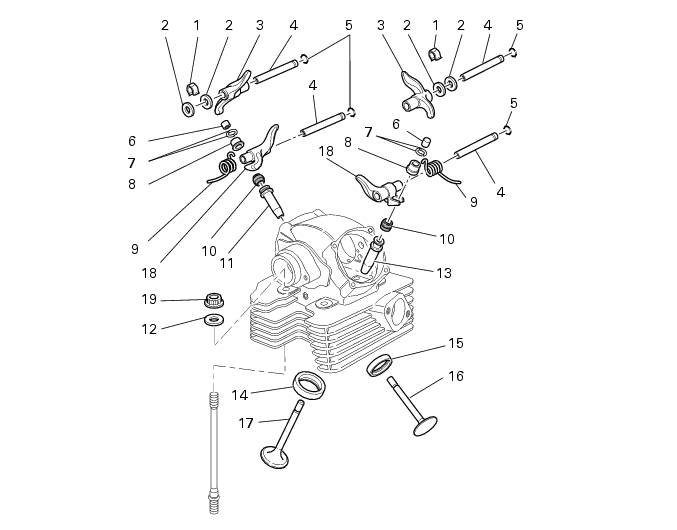
Bold reference numbers in this section identify parts not shown in the figures alongside the text, but which can be found in the exploded view diagram.
Removal of the cylinder head assembly
 
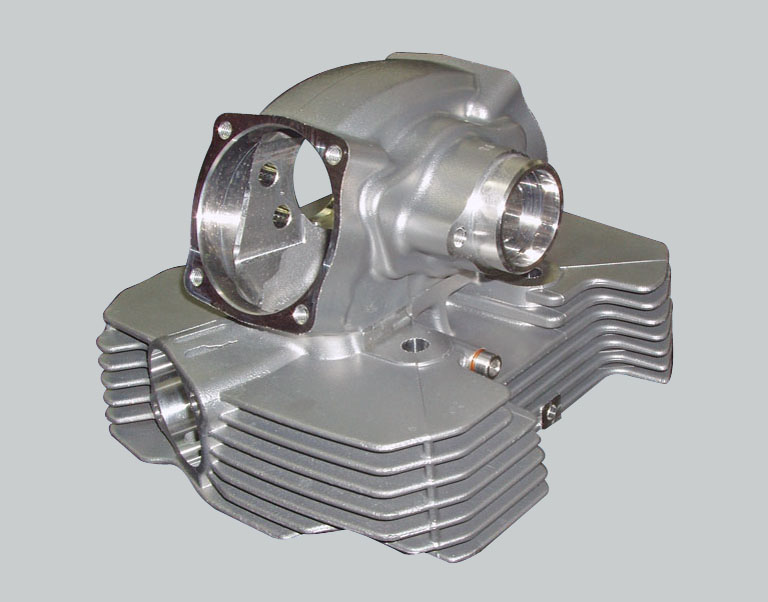
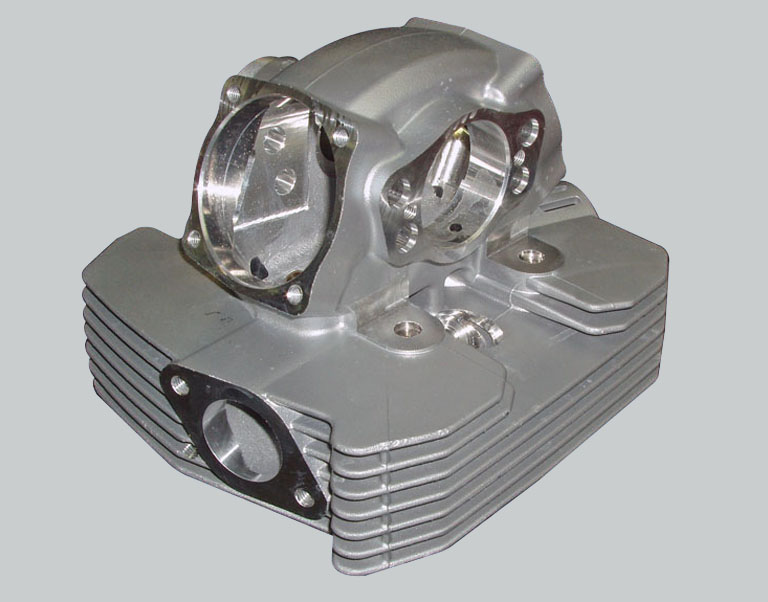
Removal of the cylinder heads
Note
On disassembly of the components mounted on the cylinder head it is essential that they are laid out or marked in such a way that they can be refitted in exactly the same position they occupied before being removed.
 
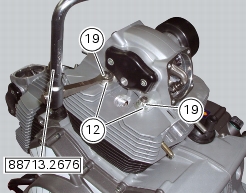
Using tool 88713.2676, unscrew the nuts (19) on the cylinder head studs.
Remove the nuts (19) and recover the special washers (12) positioned between the nuts and the cylinder head.
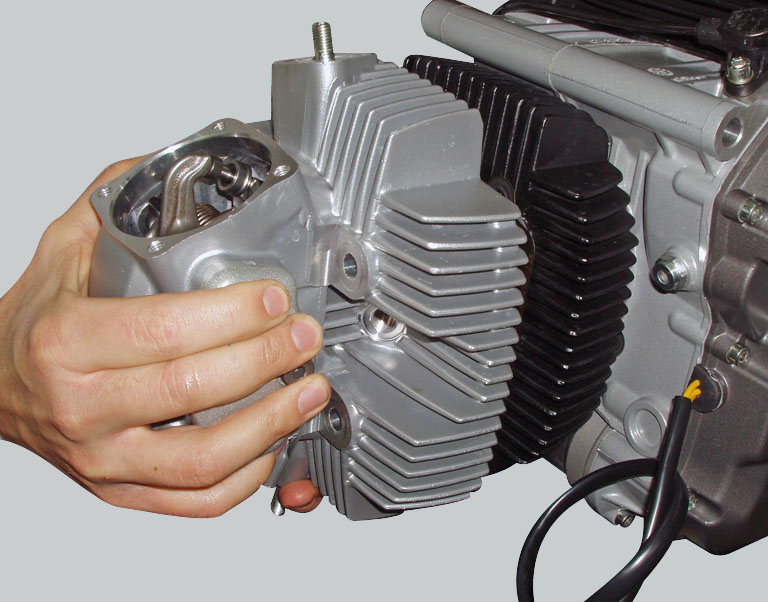
Remove the head assembly from the engine by lifting it off the engine stud bolts.
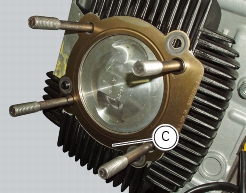
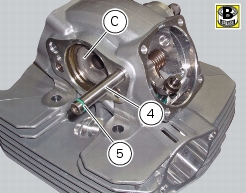
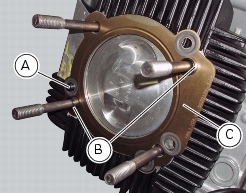
Remove the cylinder head gaskets (C).
Removal of the rocker arms, shims and valves
 
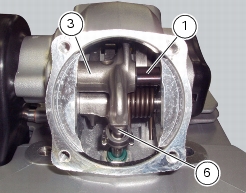
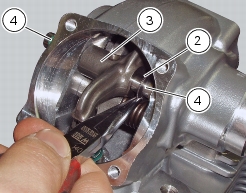
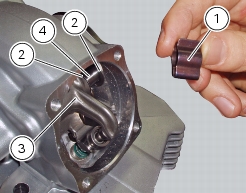
Remove the clip (1) securing the opening rocker (3).
Move the rocker arm (3) to free the valve opening shim (6).
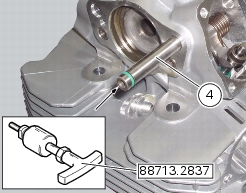
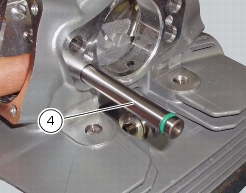
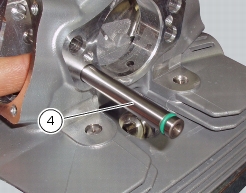
Screw tool 88713.2837 on the threaded end of the opening rocker arm shaft (4).
Slide out the rocker arm shaft (4) and recover the opening rocker arm (3) and the two shims (2).
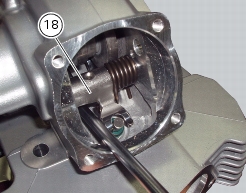
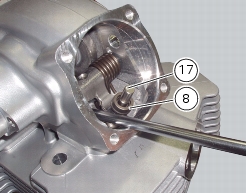
Using a screwdriver, hold the closing rocker arm (18) in the valve open position:
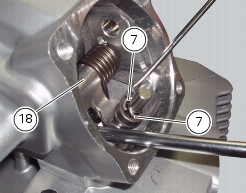
Slide the valve closing shim (8) along the intake valve stem (17) in such a way as to make it possible to remove the two half rings (7) securing the valve.
Use long nosed pliers or a magnetic screwdriver to remove the half rings (7) from the valve stem.
Slide the valve closing shim (8) off the valve (17).
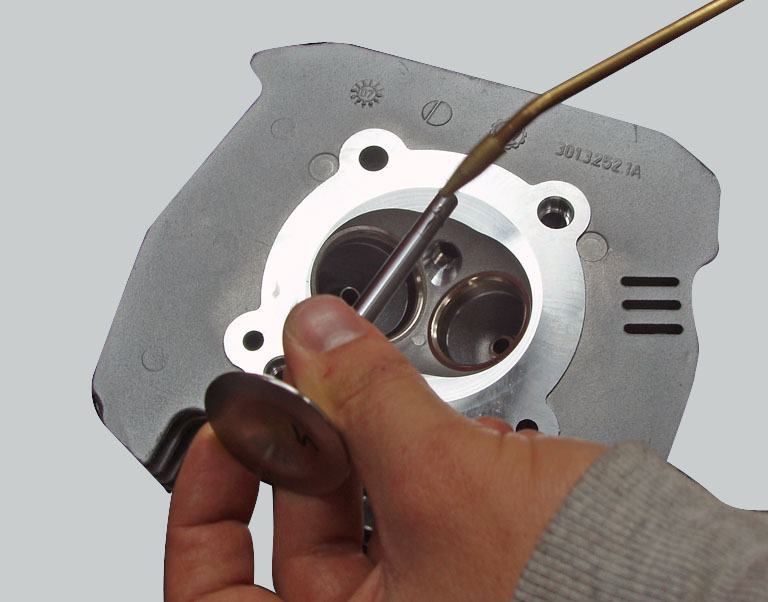
Withdraw the valve (17) from the underside of the cylinder head.
Repeat the procedure for the exhaust side.
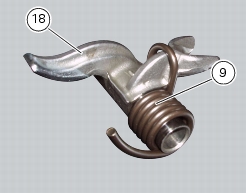
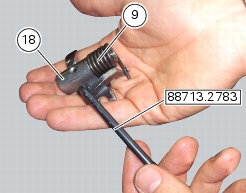
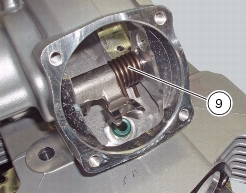
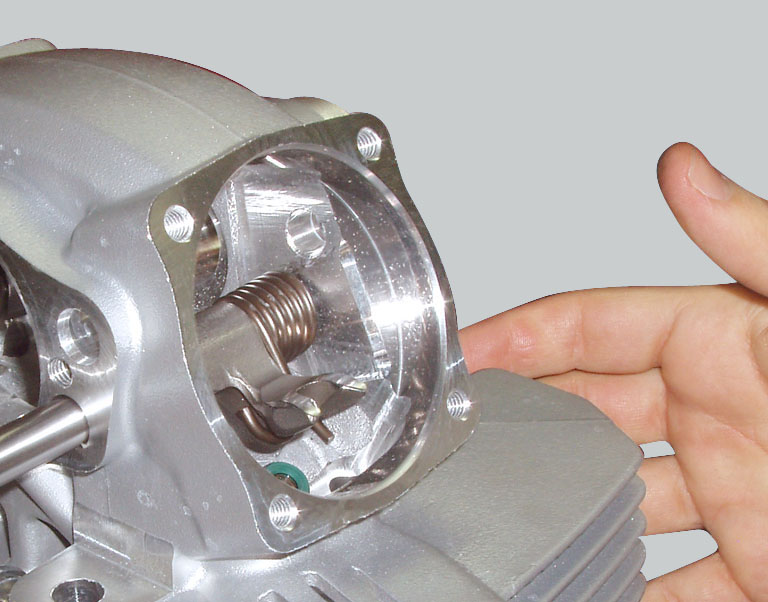
Attach the end of the spring (9) of the closing rocker arm (18) to the tool 88713.2783.
Slide out the closing rocker arm shaft (4) using tool 88713.2837.
Remove the rocker arm (18), the spring (9) and the service tool 88713.2783.
 
Overhaul of cylinder head components
Overhaul of the cylinder heads
Remove any carbon deposits from the combustion chamber and its ducts.
Check for cracking and inspect the sealing surfaces for scoring, ridges or other damage.
 
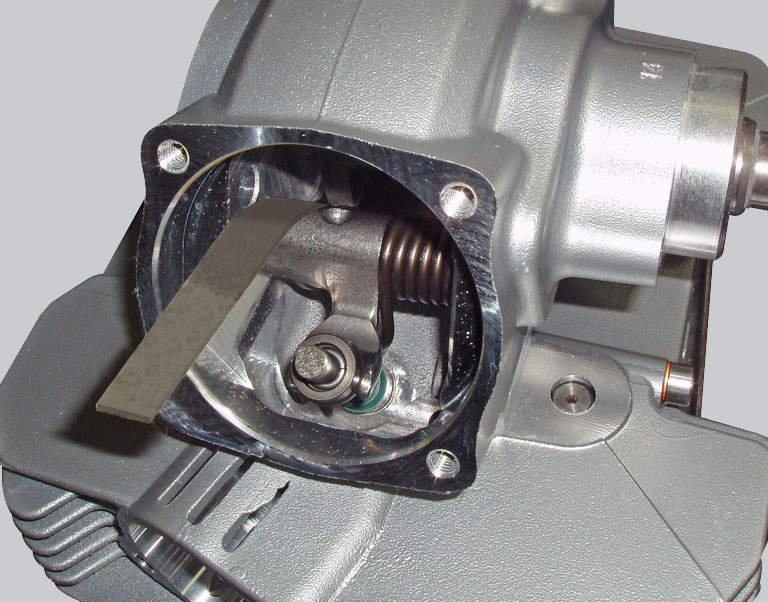
The cylinder barrel mating surface must be perfectly flat. If this is not the case, spread diamond dressing compound (6 to 12 micron thickness) on a reference surface and slide the cylinder head on the surface as shown in the figure until a flat finish is obtained.
Checking the valves
Check that the stem and the valve seat contact surface are in good condition. There must be no pitting, cracks, deformations or signs of wear.
Warning
The valves cannot be ground.
 
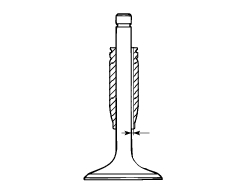
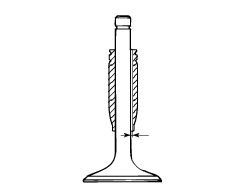
Perform the following checks: measure the diameter of the valve stem (D) at various heights along the portion that runs in the valve guide.
Check that valve head band (at 45° to valve head top face) is concentric to the valve stem as follows: place the valve on a V block, set a dial gauge at right angles to the head and rotate the valve.
-
Checking the valve seats
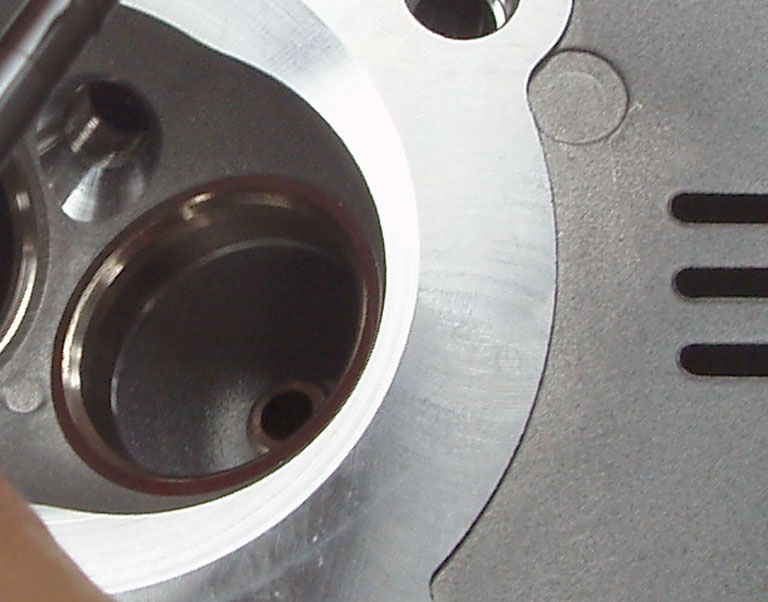
Visually inspect the valve seats: there must no excessive hollowing and there must be no pitting or cracks.
If a valve seat is slightly damaged, it may be lapped using the special 45° lapping tools, with subsequent grinding of the valves and leak test.
If the valve seats are excessively damaged, fit oversize seats. Replacement seats are available with 0.03 and 0.06 mm oversized outside diameters.
Important
When you change the valve seats, change the valve guides as well.
 
Renewal of the valve seat
Remove the worn seats by grinding out the rings. Take great care not to damage the valve seat housing in the cylinder head.
Check the diameter of head bores and choose the oversized valve seat that will give an interference fit of 0.11 to 0.16 mm. Replacement valve seats are supplied in outside diameter oversizes of 0.03 and 0.06 mm.
Heat the cylinder head gradually and evenly up to 200 °C and chill the new valve seats in dry ice.
Install the seats perfectly square into their bores using a suitable installer.
Allow to cool and then lap the valve seats, smooth the connections between the ducts and the new seats and grind the valves.
Valve–seat contact surfaces
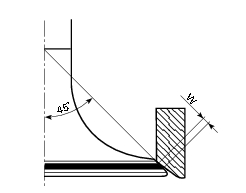
Use Prussian blue or a mixture of minimum and oil to check that the contact surface (W) between valve and seat is 1.0 to 1.5 mm.
Maximum permissible limit: 2.0 mm.
Grind the seat if the dimension measured is greater than above limit.
Fill the intake and exhaust ducts with fuel to check for leaks; if leaking occurs, check the sealing surfaces for burrs.
Overhaul of the valve guides
Carefully examine the internal surface of the valve guide: for cracking or distortion. If the guide is excessively out-of-round, use a reaming tool to make the mating faces more uniform.
Note
When you change the valve guide, you must also change the valve. The intake valve guides are in cast iron while the exhaust ones are in bronze.
Valve-valve guide clearance
Assembly clearance: 0.03 to 0.06 mm.
 
Maximum permissible wear limit: 0.08 mm.
Renewal of the valve guides
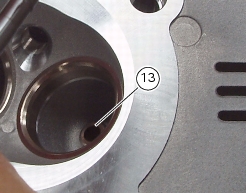
To renew the valve guides (11) and (13), proceed as follows.
Heat up the cylinder head gradually and evenly up to 200 °C.
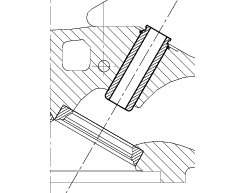
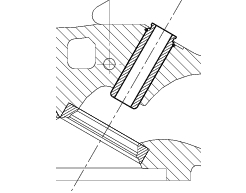
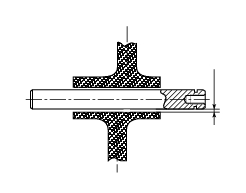
Drive out the valve guide using a suitable drift (see drawing).
Allow the cylinder head to cool down and check the condition of the seat.
Select the most suitable replacement valve guide to obtain an interference fit in the cylinder head bore of 0.022-0.051 mm; replacement valve guides are supplied in O.D. oversizes of 0.03, 0.06 and 0.09 mm complete with lock rings.
Heat up the cylinder head again and chill the new valve guide in dry ice.
Lubricate the seat and install the valve guide so that the stop ring is located against the head, using the drift previously used to remove the old guide.
Allow the cylinder head to cool, then ream out the inside of the new valve guide.
Overhauling the rocker arms
Check for signs of wear, grooves or chrome flaking off.
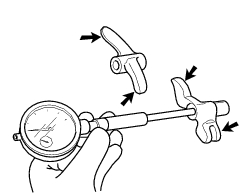
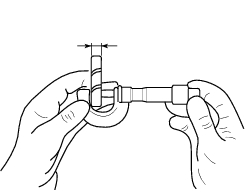
Check the condition of the rocker arm bore and shaft:
-
-
Check the contact surfaces of the shims and the valve return collets are perfectly flat with no signs of wear.
Rocker shaft–rocker bore clearance
The assembly clearance must be 0.03 to 0.06 mm.
Maximum permissible wear limit: 0.08 mm.
The rocker arm shafts should be a light force fit in the cylinder head.
In the event of excessive clearance, fit 0.02 mm oversize shafts (available from Parts Service).
Checking the rocker arm springs
Carefully examine the springs (9) of the closing rocker arms (18). There must be no signs of cracking, distortion, or loss of elasticity.
Refitting the cylinder head assembly
To refit the cylinder head reverse the steps of the removal procedure; pay particular attention to those operations mentioned specifically.
It is very important that all the components are carefully cleaned.
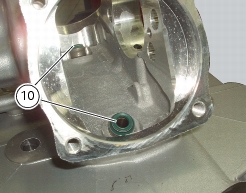
If removed, fit new valve guide seal rings (10), lubricate with engine oil and insert from the spring side with tool part no. 88713.2442.
Fit the end of the tool into the valve guide and use a mallet to tap the seal rings (10) home into the valve guides.
Refitting of the rocker arms, shims and valves
Fit the closing rocker arm (18) and relative spring (9) on service tool no. 88713.2783.
Insert the tool-rocker-spring assembly in the cylinder head and fit shaft (4) with a new washer (5), duly lubricated.
Important
When assembling the rocker arm shafts (4) make sure that threaded hole is on the external side of the cylinder head.
Detach the spring (9) and remove the tool no. 88713.2783.
Proceed in the same way for the exhaust side.
Install the valve (17) and valves (16), first lubricating them with engine oil.
Temporarily fit the camshaft (C).
Using a screwdriver, hold the closing rocker arm (18) in the valve open position:
Fit the closing shim (8) on the valve stem (17) with the larger diameter side facing the rocker arm.
Position the two half rings (7) on the valve stem.
Remove the screwdriver and position the closing rocker arm (18) in rest position.
Reposition the screwdriver, and compress the spring as much as possible while holding the valve, the shim and the half rings in the valve closed position. Release the closing rocker (18) with a rapid motion, so that the half rings seat in the shim.
With the valve in rest position and while pushing on the rocker arm to oppose the force of the return spring, check that the clearance between the rocker shoe and the closing shim is within the specified tolerance limits (Sect. 9 - 4.1, Checking the closing clearance (Sc) of the intake/exhaust valves).
If not, adjust the valve clearance (Sect. 9 - 4.1, Checking and adjusting valve clearances).
Once the required clearance is obtained, take out the camshaft (C) that was temporarily installed, lubricate it using graphite oil and refit it onto the head.
Insert the rocker arm shaft (4) with the threaded hole on the external side of the cylinder head: gasket (5) shall be replaced and duly lubricated every time it is removed.
Locate the opening rocker arm (3) and the two shims (2) on shaft (4).
Refit the camshaft end caps (Sect. 9 - 4.3, Refitting side covers).
Refit the timing belt pulleys (Sect. 9 - 4.2, Refitting the timing belt driveshaft pulleys).
Locate the valve opening shim (6) on the valve stem.
With the valve in rest position, check that clearance between the rocker arm (3) and the shim (6) is within the specified tolerance limits (Sect. 9 - 4.1, Checking the opening clearance (Sa) of the intake/exhaust valves).
If not, adjust the valve clearance as described under Sect. 9 - 4.1, Checking and adjusting valve clearances.
Fit the side clip (1) on the shaft (4) of the opening rocker arm (3) between the two spacers (2).
 
Refitting the cylinder heads
Warning
To prevent oil leaks past the contact area between cylinders and crankcase, each time the head is removed, cylinder and piston must be removed as well to clean the mating faces of crankcase and cylinder and restore the spoiled gaskets and O-rings and apply again liquid sealant (Sect. 9 - 5, Refitting the cylinder/piston assembly).
 
Before refitting the cylinder head assemblies, fit new head gaskets (C) and check that the locating dowels (A) and bushings (B) are installed (Sect. 9 - 5, Cylinder/piston assemblies).
Fit the cylinder head onto the studs and lower it down onto the cylinder barrel.
Fit the special washers (12) over the stud bolts with the square edged face towards the cylinder head and the flat face towards the inside.
Grease the threads and undersides of the nuts (19) and the threads of the studs with the recommended grease.
Use the tool part no. 88713.2676 combined with a torque wrench, to tighten the fastening nuts to the specified torque, proceeding in a crosswise sequence with a snug torque of 15 Nm (Min. 13 Nm - Max. 17 Nm); with a preload torque of 30 Nm (Min. 28 Nm - Max. 32 Nm); with a tightening torque of 48 Nm (Min. 46 Nm - Max. 50 Nm) (Sect. 3 - 3, Engine torque settings).
Important
Incorrect tightening could cause abnormal elongation of the studs and serious damage to the engine.
 
1