8.2 -
1
2
3
4
5
6
7
8
9
10
11
12
13
14
15
16
17
18
19
20
21
22
23
 Spare parts catalogue
Important
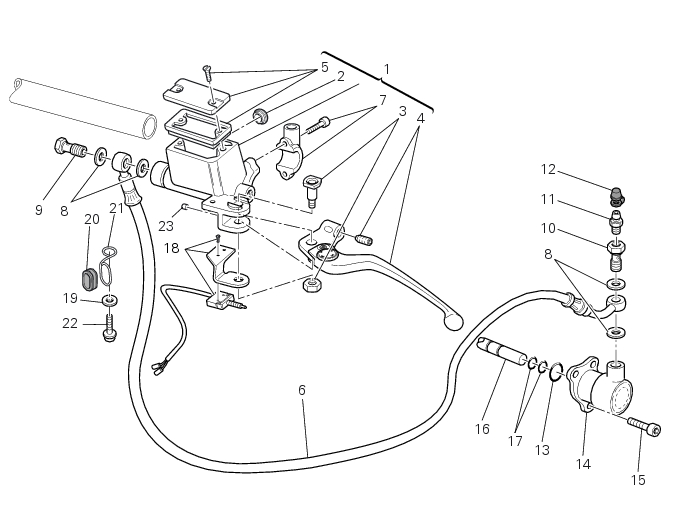
Bold reference numbers in this section identify parts not shown in the figures alongside the text, but which can be found in the exploded view diagram.
Removal of the clutch master cylinder assembly
Warning
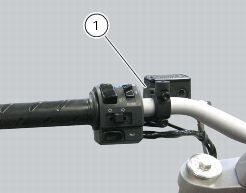
The clutch master cylinder manufacturer advises against servicing of the clutch master cylinder (1) due to the safety-critical nature of this component. Incorrect overhaul of this component could endanger rider safety.
 
Maintenance operations of the master cylinder are limited to replacing the following parts: control lever, reservoir unit, and master cylinder fasteners.
 
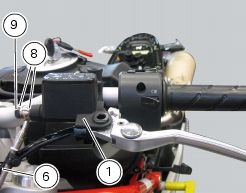
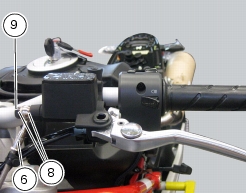
Unscrew the banjo bolt (9) recovering the sealing washers (8), to release the clutch master cylinder assembly (1) from the clutch control hose (6).
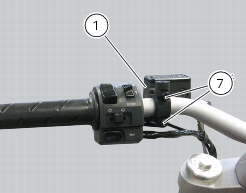
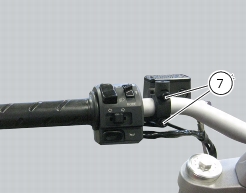
Unscrew the two clamp screws (7) securing the clutch master cylinder assembly to the handlebar.
Refer to the exploded view at the beginning of this section for indications on disassembly and replacement of the master cylinder components.
Refitting the clutch master cylinder assembly
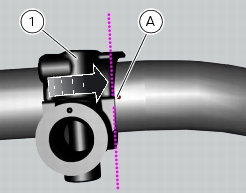
Insert the clutch master cylinder unit (1) on the left side of the handlebar to bring the terminal internal edge in correspondence to the bolted joints (A).
 
Tighten the fixing screws (7) to a torque of 10 Nm ±10% (Sect. 3 - 3, Frame torque settings) following the sequence 1-2-1 starting from the upper screw.
Locate the hose (6) and sealing washers (8) on the master cylinder (1) and secure with the banjo bolt (9), but do not tighten at this stage.
 
Warning
An incorrectly positioned hose can cause clutch faults and interfere with moving parts.
 
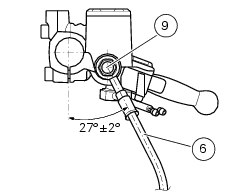
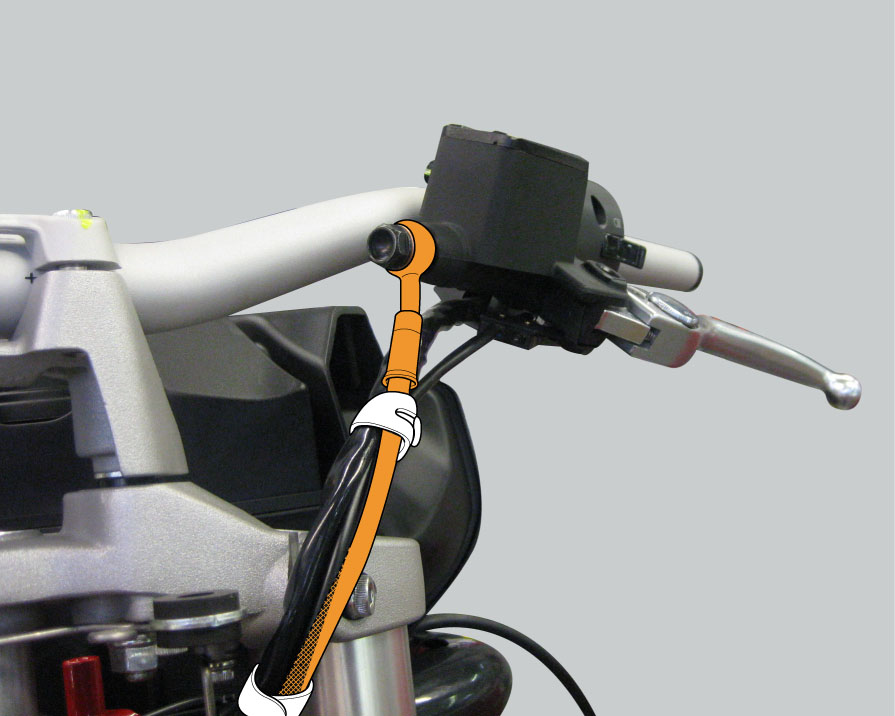
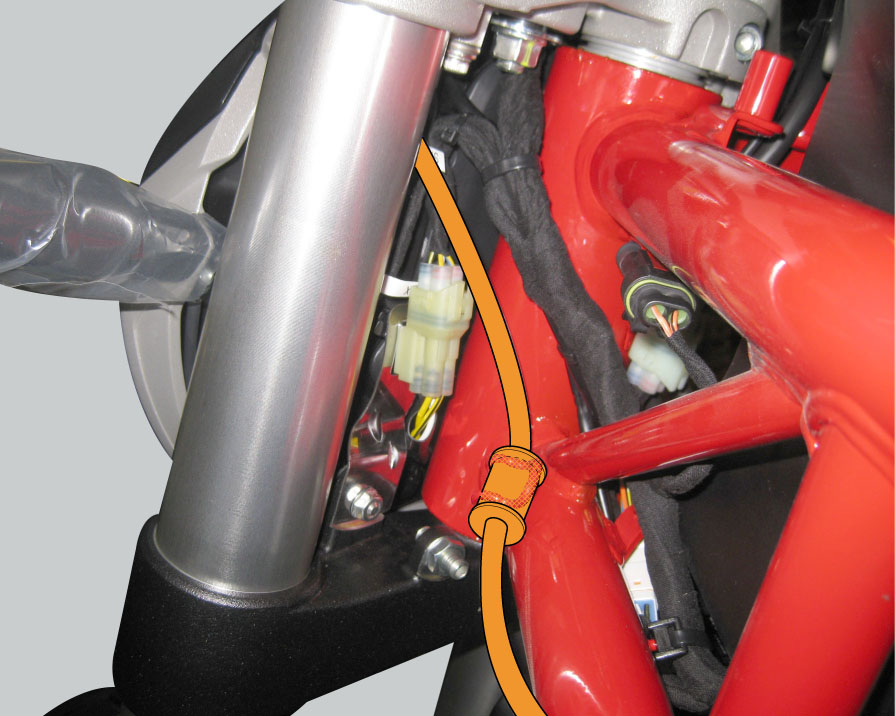
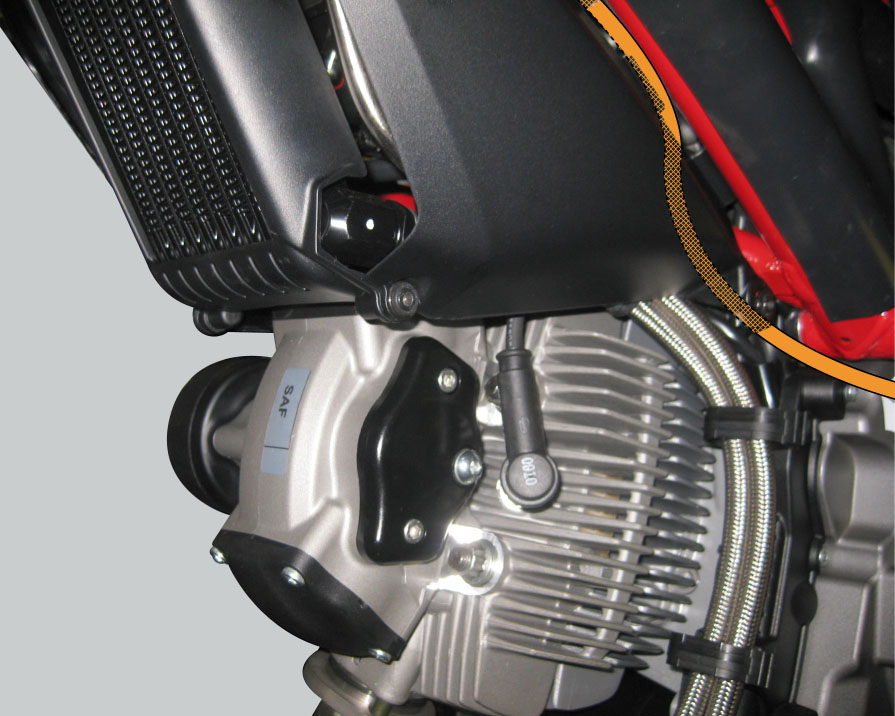
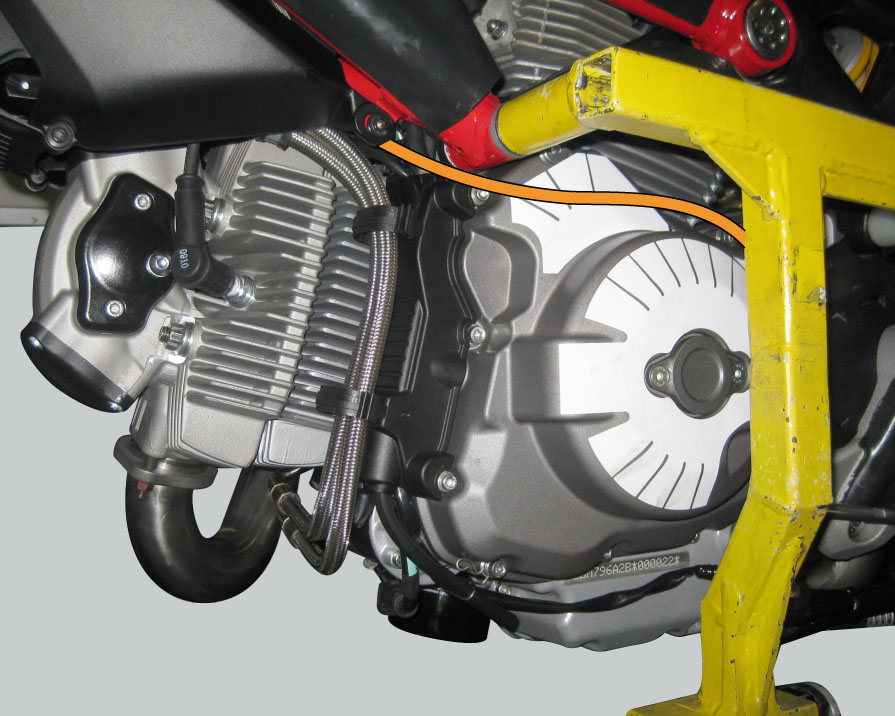
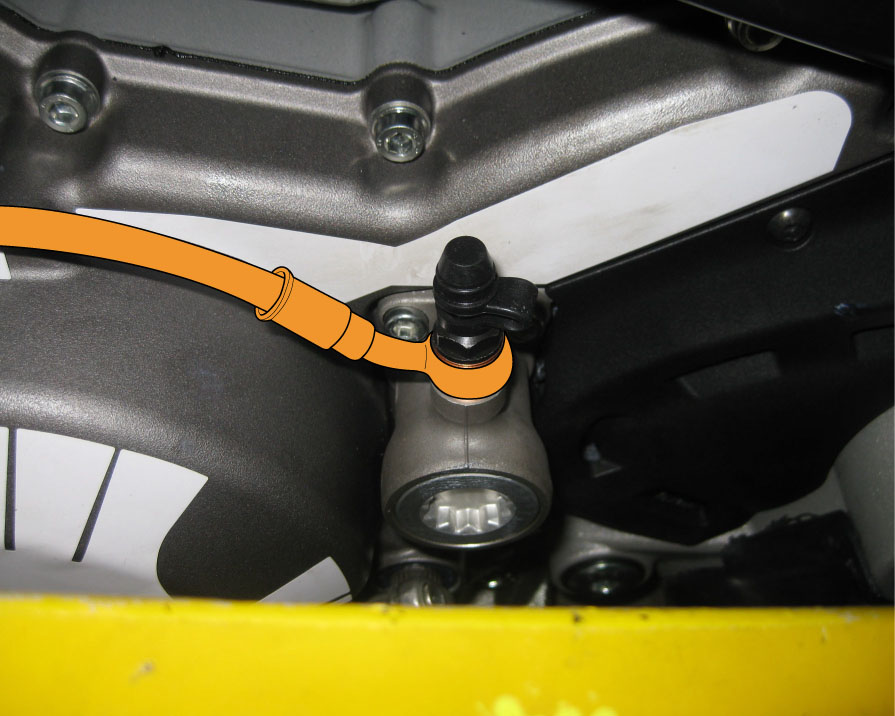
For the positioning of the clutch hose (6) and retaining clips, see the illustration at the end of this section.
Orientate the hose (6) as illustrated in the figure and then tighten the special screw (9) to a torque of 4 Nm ± 10% (Sect. 3 - 3, Frame torque settings).
 
Removal of the clutch transmission unit
Warning
The clutch slave cylinder manufacturer advises against servicing of internal components of clutch slave cylinder(23) due to the safety critical nature of this component.
Incorrect overhaul of these critical safety components can endanger rider and passenger safety.
The only components that should be renewed are the complete clutch transmission unit, the bleed valve, the seals and the complete clutch pushrod assembly.
 
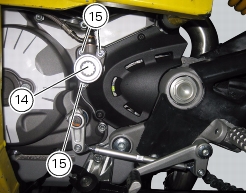
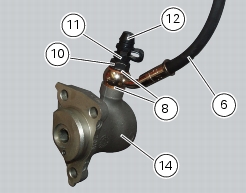
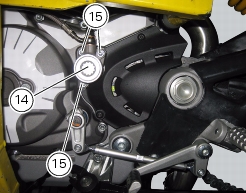
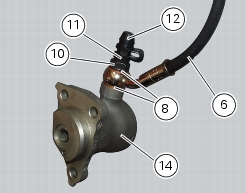
Undo the three screws (15) securing the clutch transmission unit (14) to the engine and withdraw the unit from the crankcase.
Remove the dust cap (12) and the bleed valve (11) and unscrew the banjo bolt (10), taking care to recover the sealing washers (8): the unit (14) is now disconnected from hose (6).
Push in the piston to force out all the fluid from inside the cap.
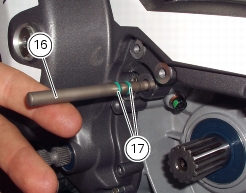
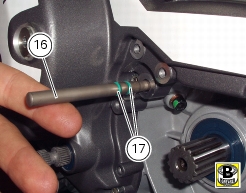
At this point, it is possible to slide also the clutch gear rod (16). Check the wear state of the two O-rings (17) and replace them, if necessary.
Note
If the two O-rings (17) need to be replaced, it is necessary to replace also the O-ring (13) of the unit (14).
Refitting the clutch transmission unit
Note
If the clutch pushrod (16) is replaced, it is necessary also to replace the O-rings (17) and (13) of the unit (14).
 
Grease and refit the clutch pushrod (16) with the two O-rings (17).
Note
If the unit (14) is replaced, it is necessary also replace the O-ring (13) and the two O-rings (17) of the pushrod (16).
 
Place the unit (14) on the crankcase, tighten the screws (15) to a torque of 10 Nm ±10% in the sequence 1-2-3-1 (Sect. 3 - 3, Frame torque settings).
 
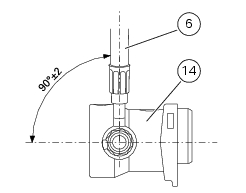
Locate the pipe (6) on the clutch transmission unit(14), paying attention to the pipe retainer direction in the unit (23).
Warning
An incorrectly positioned hose can cause clutch faults and interfere with moving parts.
Position the two gaskets (8) and tighten the screw (10) to a torque of 23 Nm ±10% (Sect. 3 - 3, Frame torque settings).
Refit the bleed valve (11) and the dust cap (12).
To position the pipe retaining clamps (6) refer to the table on the following page.
 
 
Positioning of the clutch hose